
ML-HADS
Multi-Layer Hybrid Anti-Drone System
The Multi-Layer Hybrid Anti-Drone System (ML-HADS) is a highly scalable and modular air defence system that combines soft-kill and hard-kill assets to protect critical infrastructure from Unmanned Aerial Systems (UAS). The system bundles all our Counter-UAV expertise into one integrated architecture, built from three tightly connected layers.
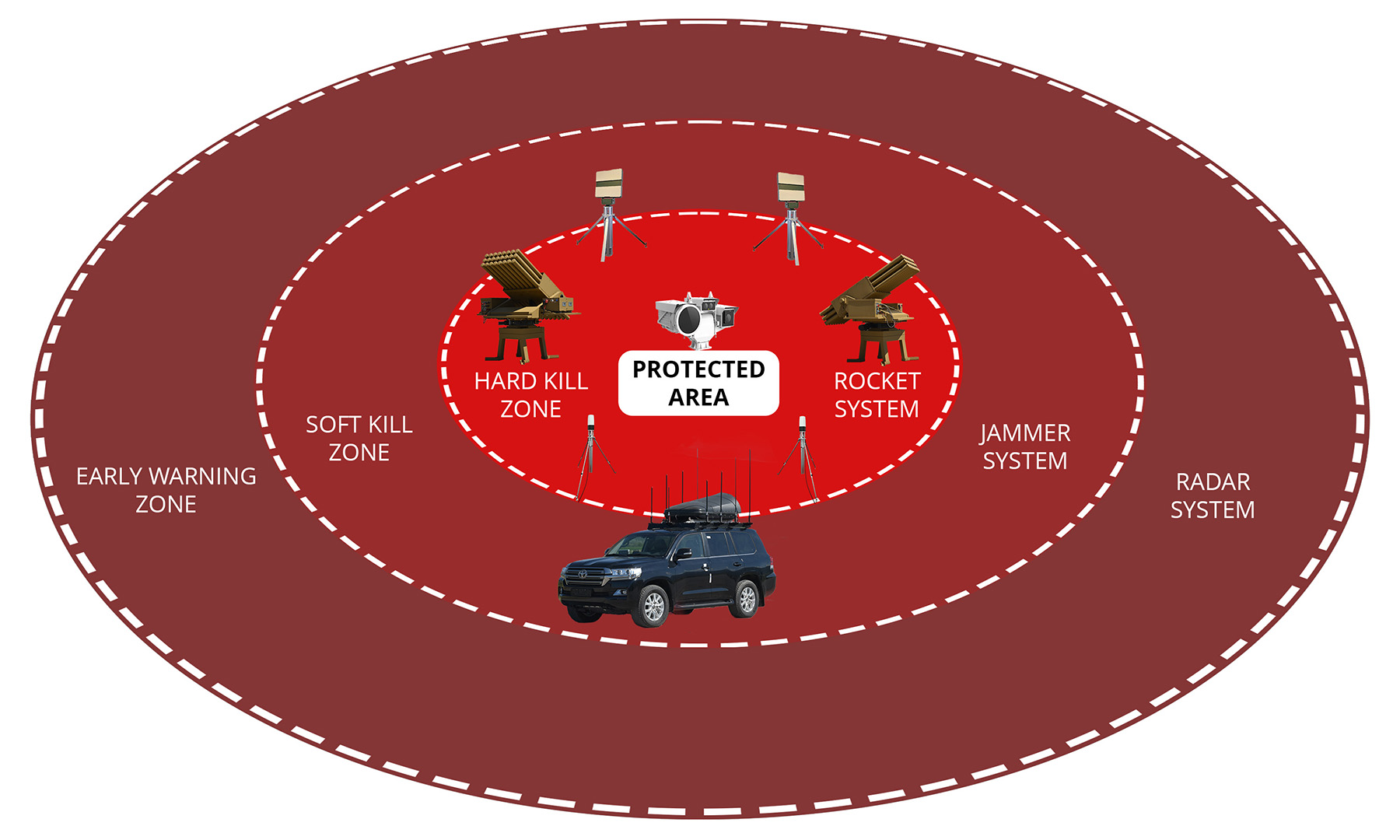
1. Early Warning Zone
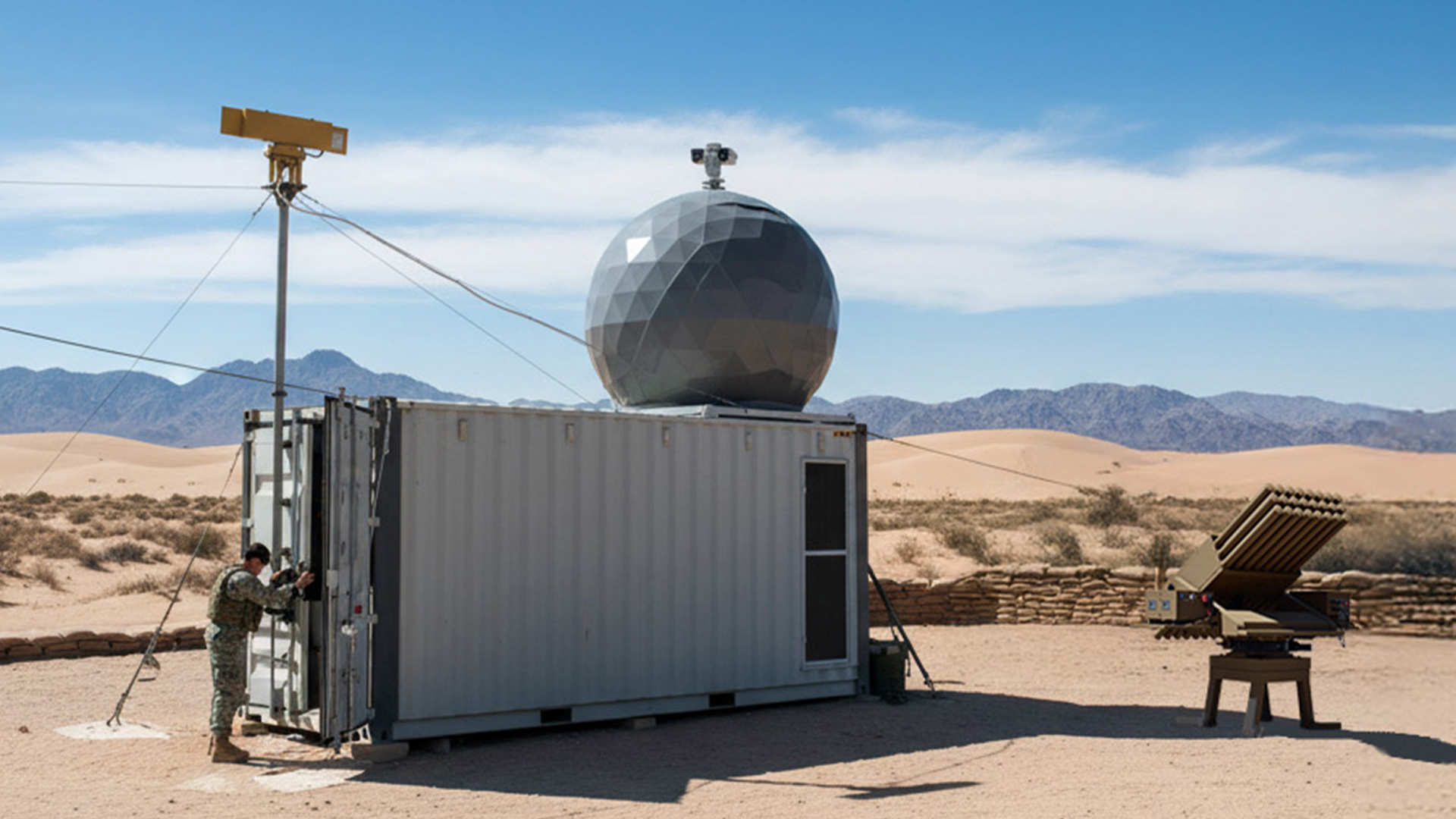
The Early Warning Zone forms the first line of defence and uses our advanced radars, multiple passive RF sensors and EO/IR cameras. Together, these sensors create an early and highly reliable aerial picture. The radar detects and tracks small, low-flying UAVs, while RF sensors analyse the electromagnetic spectrum for control signals, telemetry and protocol-specific characteristics. Cameras provide instant visual confirmation.
Through sensor fusion, all this data comes together in the central C2 system, where AI analyses target movements, classifies the threat and provides insight into the UAV's behaviour. This reveals whether a drone is flying autonomously, can be jammed or poses an increased risk. The Early Warning Zone thus forms the basis for the deployment of soft-kill or hard-kill resources.
2. Soft-Kill Zone
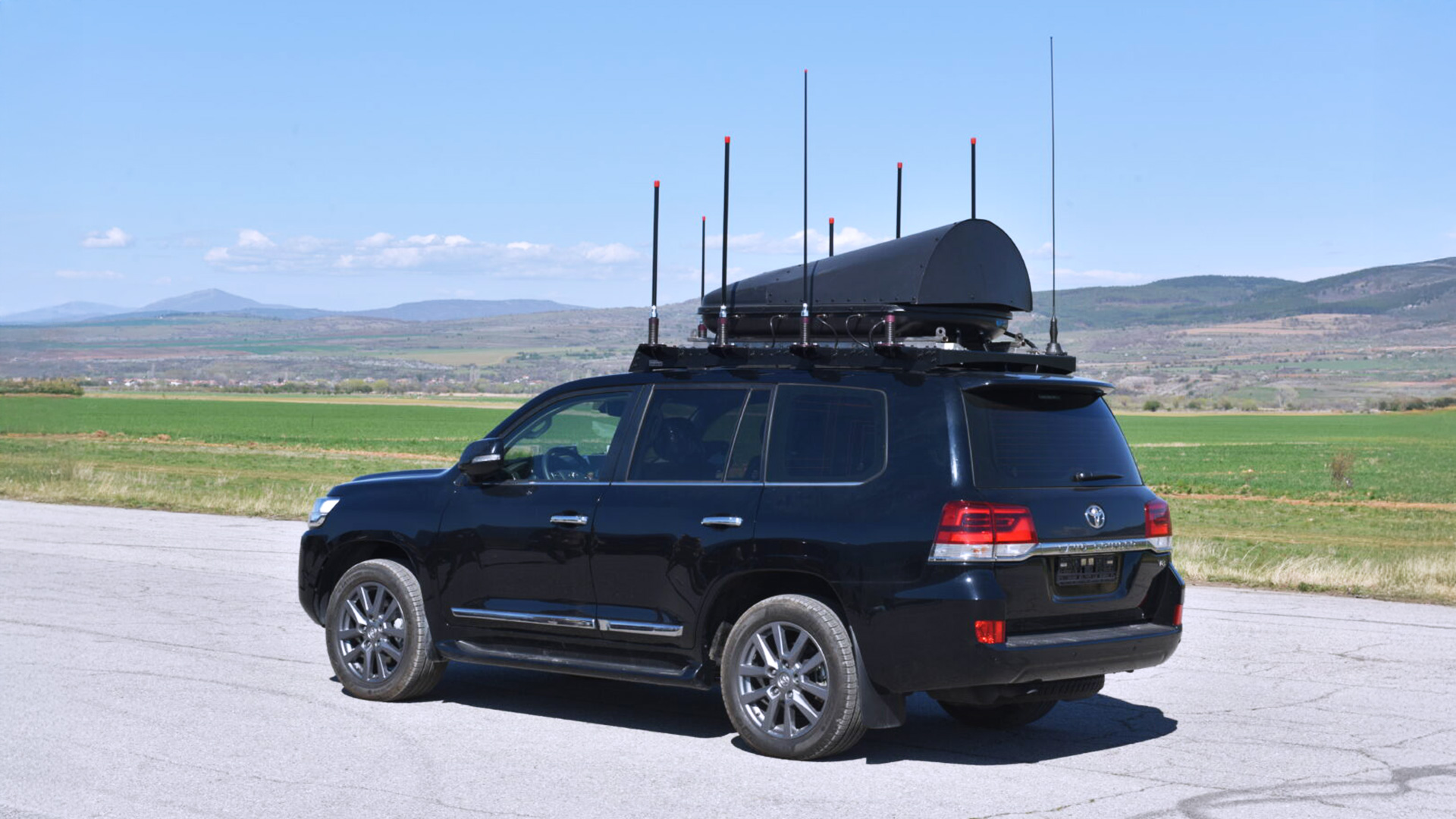
When a UAV is found to be dependent on uplinks or navigation signals, the Soft-Kill Zone is activated. This layer consists of GNSS, Mobile Band and RF jamming technology that disrupts or completely disconnects the connection between drone and operator.
The system automatically selects appropriate disruption methods based on sensor information from the Early Warning Zone, while the C2 system continuously monitors proportionality, safety and interaction between layers. The operator remains Human-in-the-Loop and receives technically sound deployment advice.
3. Hard-Kill Zone
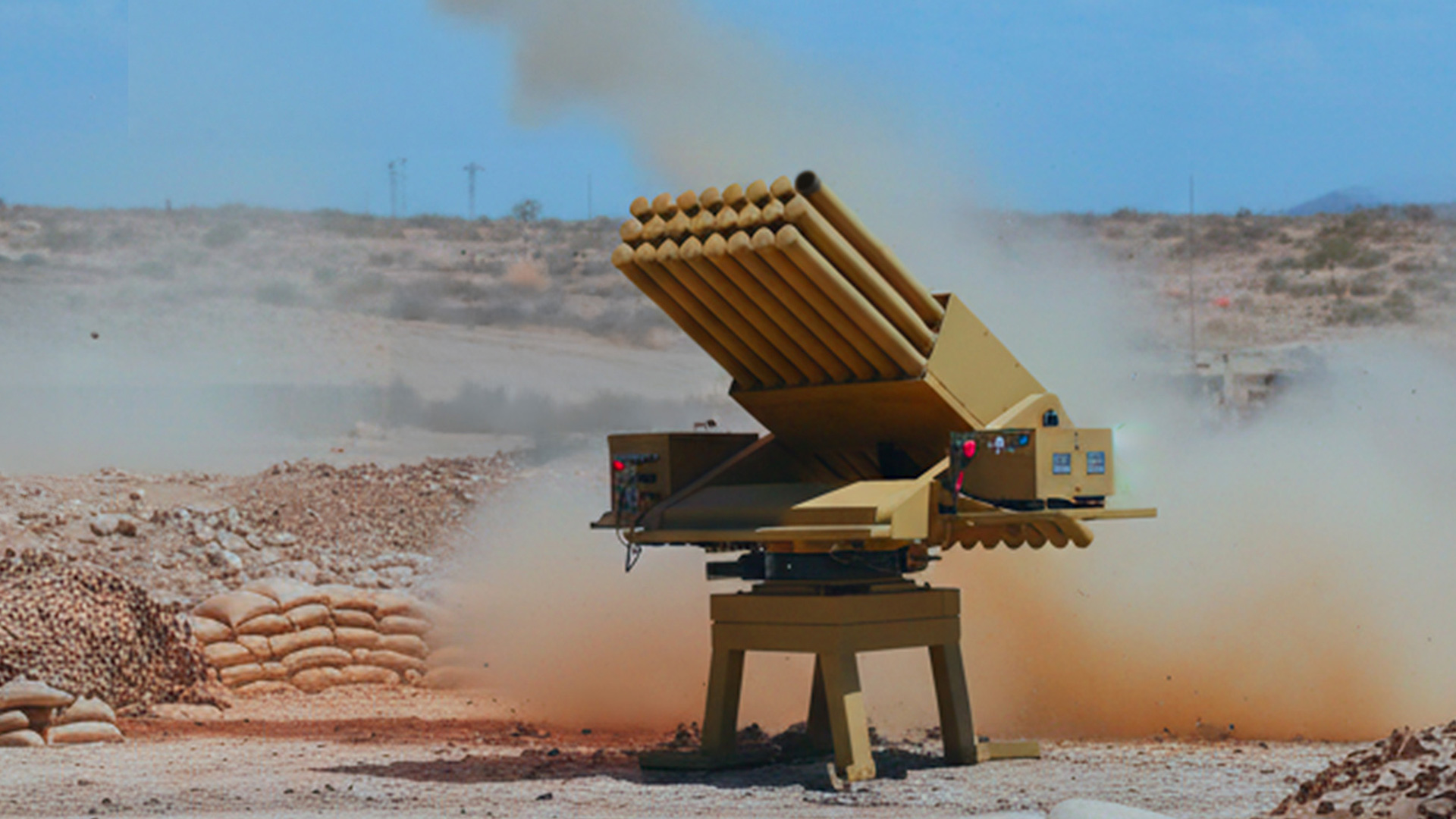
For autonomous drones, non-jamming threats or UAVs approaching too fast, ML-HADS switches to the Hard-Kill Zone. The RP-24 MLRS anti-drone missile system is the kinetic element here. Fully integrated with radar, RF, optics and the C2 system, the launcher converts this real-time data into an accurately calculated interception within seconds.
The 57 mm interceptors are electronically programmed before launch, after which the missile detonates exactly at the predicted drone volume. This ensures rapid, controlled and fully explainable neutralisation. The Hard-Kill Zone thus forms the final decision point within the integrated kill-chain.
1. Early Warning Zone
The Early Warning Zone forms the first detection layer and uses a combination of radar systems, passive RF sensors for spectrum detection and EO/IR cameras for visual identification.
The data from these sensors are brought together in a central C2 system that presents a reliable and up-to-date aerial image via sensor fusion. This layer determines whether a threat can be classified, tracked or influenced and thus forms the basis of further decision-making.
2. Soft-Kill Zone
The Soft-Kill Zone targets electronic neutralisation of UAVs that rely on command links or navigation signals.
This layer includes GNSS jamming, Mobile Band jamming and RF jamming technologies that can disrupt or break the connection between drone and operator.
The system works scenario-dependently and supports a Human-in-the-Loop approach, where operators receive proportional deployment advice based on sensor data.
3. Hard-Kill Zone
For UAVs that operate autonomously, cannot be jammed or pose a direct threat, the Hard-Kill Zone provides kinetic neutralisation.
This layer uses systems such as the RP-24 MLRS interceptor launcher, which is fully integrated with radar, RF and optical data.
The weapons platform receives real-time target information from the C2 system and performs controlled and proportional interception.
Scalability and Integration
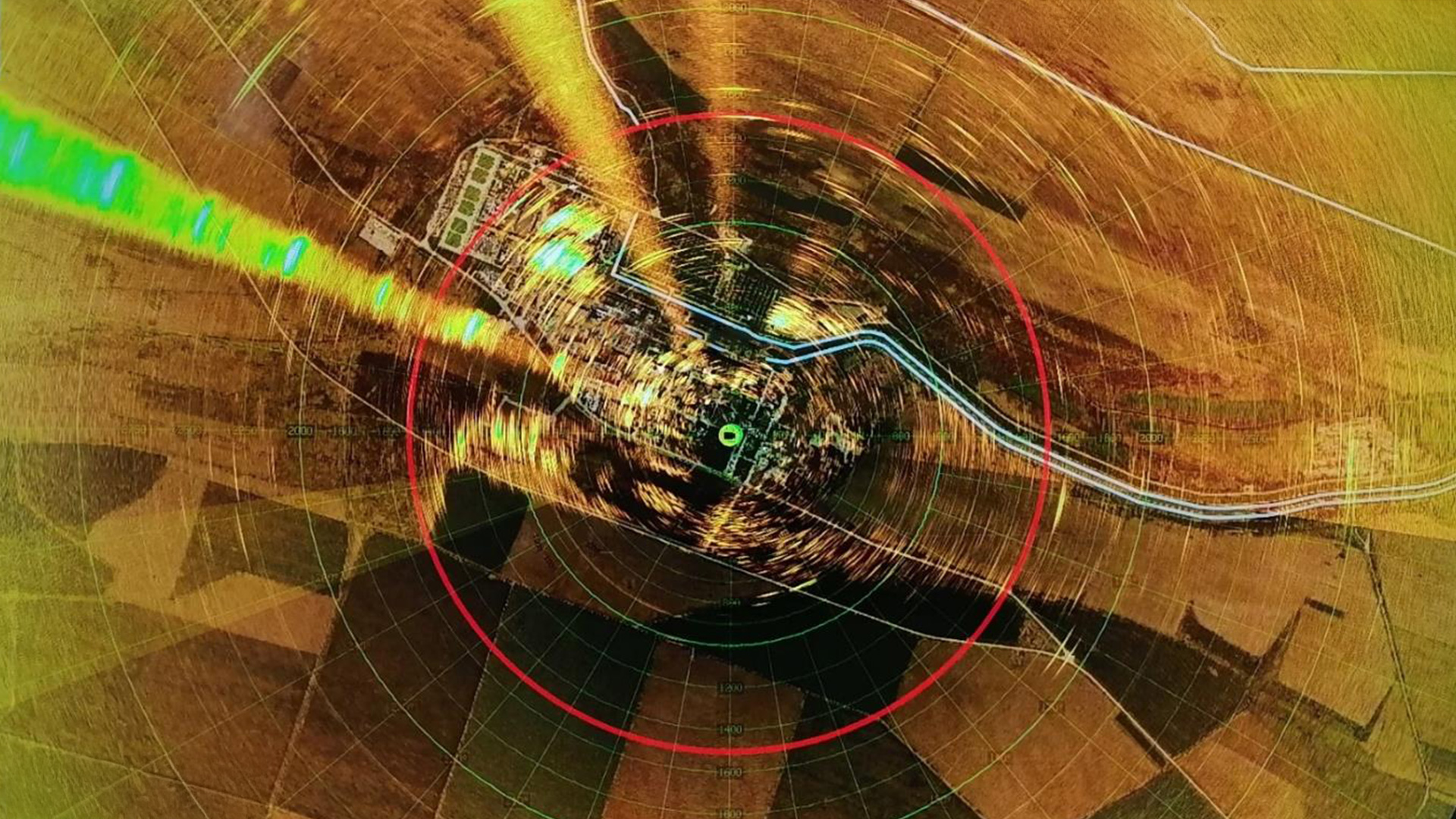
ML-HADS is fully scalable. Radars, jammers, RF sensors and missile launchers can be expanded or scaled down depending on terrain, risk and operational requirements. All components are linked via our proprietary software and hardware infrastructure, with a centralised Command and Control interface for a single unified and up-to-date overall picture.
The system can also be integrated with existing defence assets or security infrastructure via data exchange or full data fusion for seamless C4i integration.
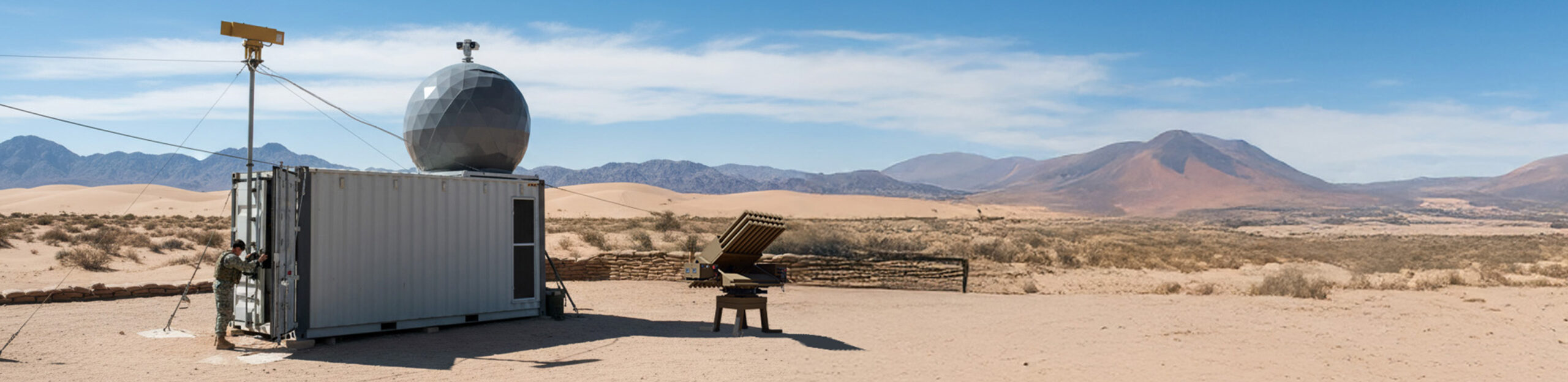
The ML-HADS shown serves as a sample configuration within our C-UAS solutions. Each implementation is fully mission-specific put together by HADES based on the operational requirements and security level of the deployment location.