

HDS Autopilot
Autonomous Flight Control, Mission Management and UAV Command Architecture
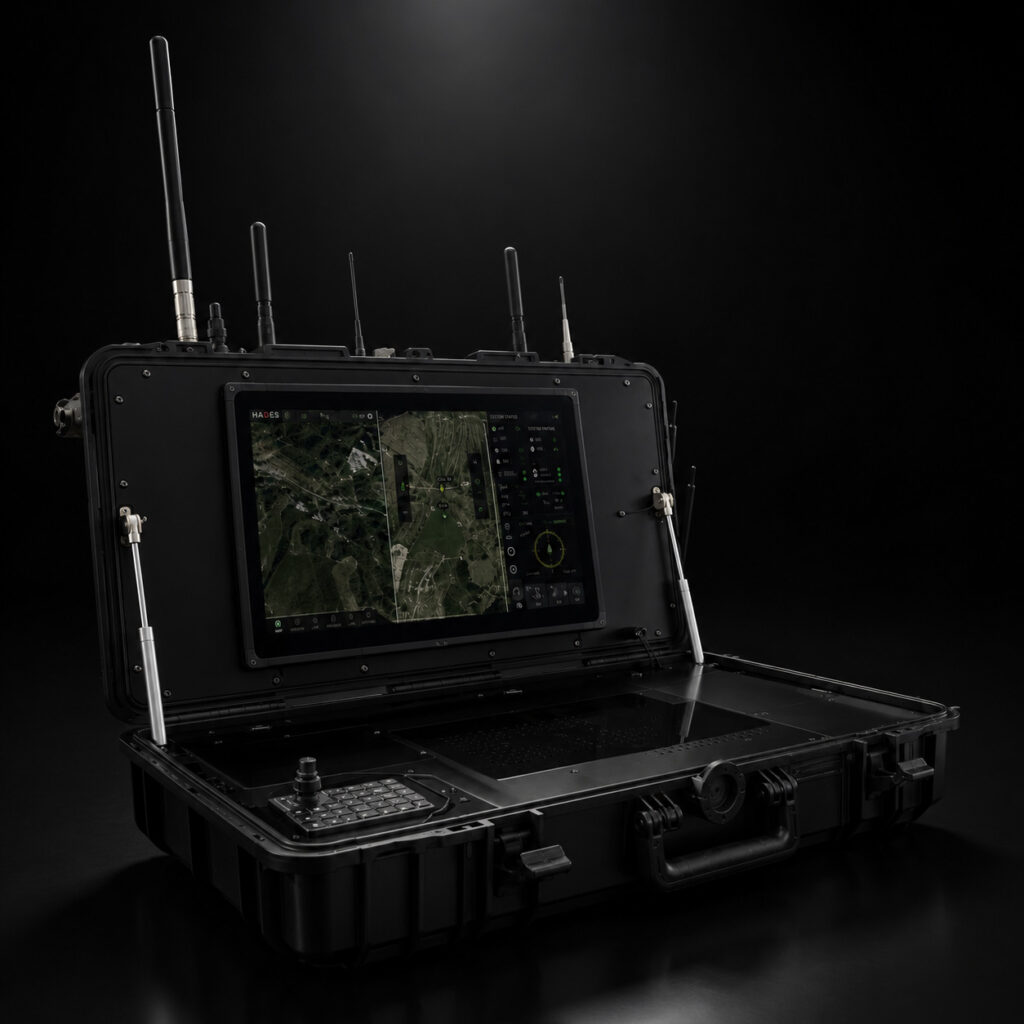
The HDS Autopilot (HDS v3.0) is the autonomous flight control and mission management system that powers the HADES family of unmanned aerial platforms. Fully developed in-house, the system combines flight control, mission execution, secure communications and platform management within a single integrated architecture.
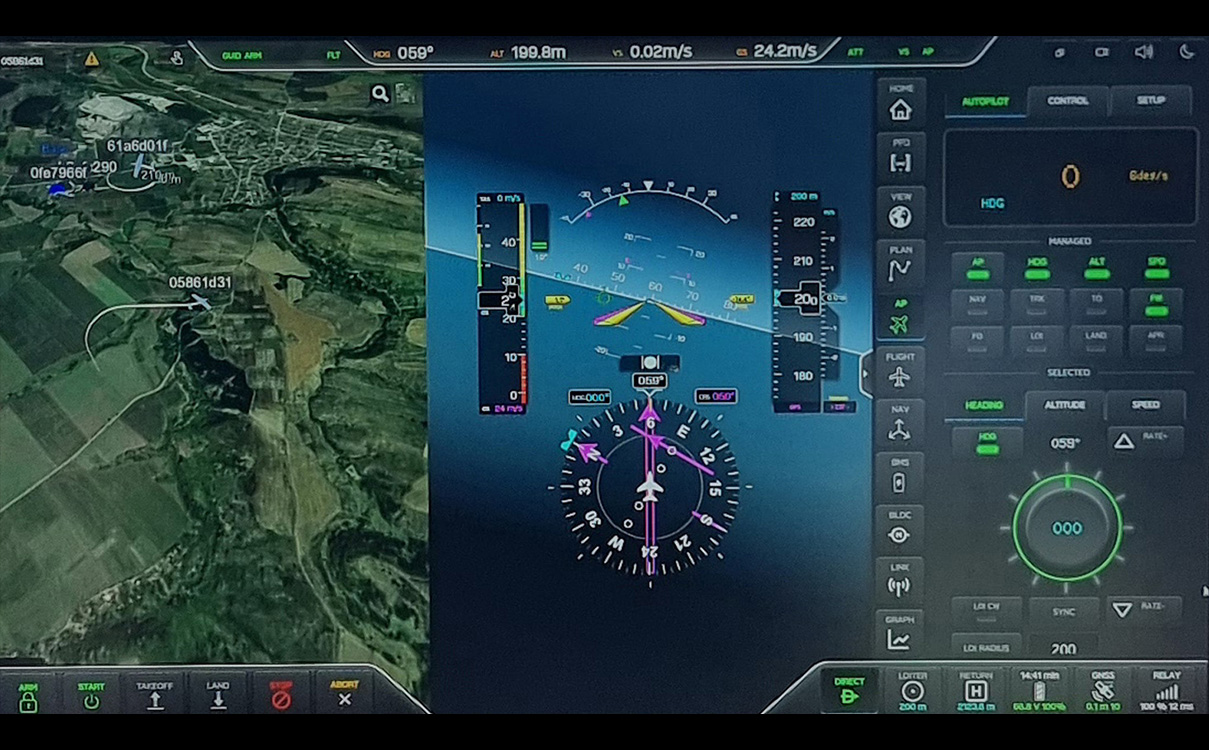
The HDS Autopilot enables operators to manage individual UAVs or coordinate multiple aerial platforms from a single joint operating environment. Designed for tactical, operational, and long-endurance missions, the system supports autonomous navigation, mission planning, platform monitoring, and real-time mission execution, whilst maintaining continuous connectivity between air assets, operators, and supporting infrastructure.
HDS Autopilot for multi-UAV mission management
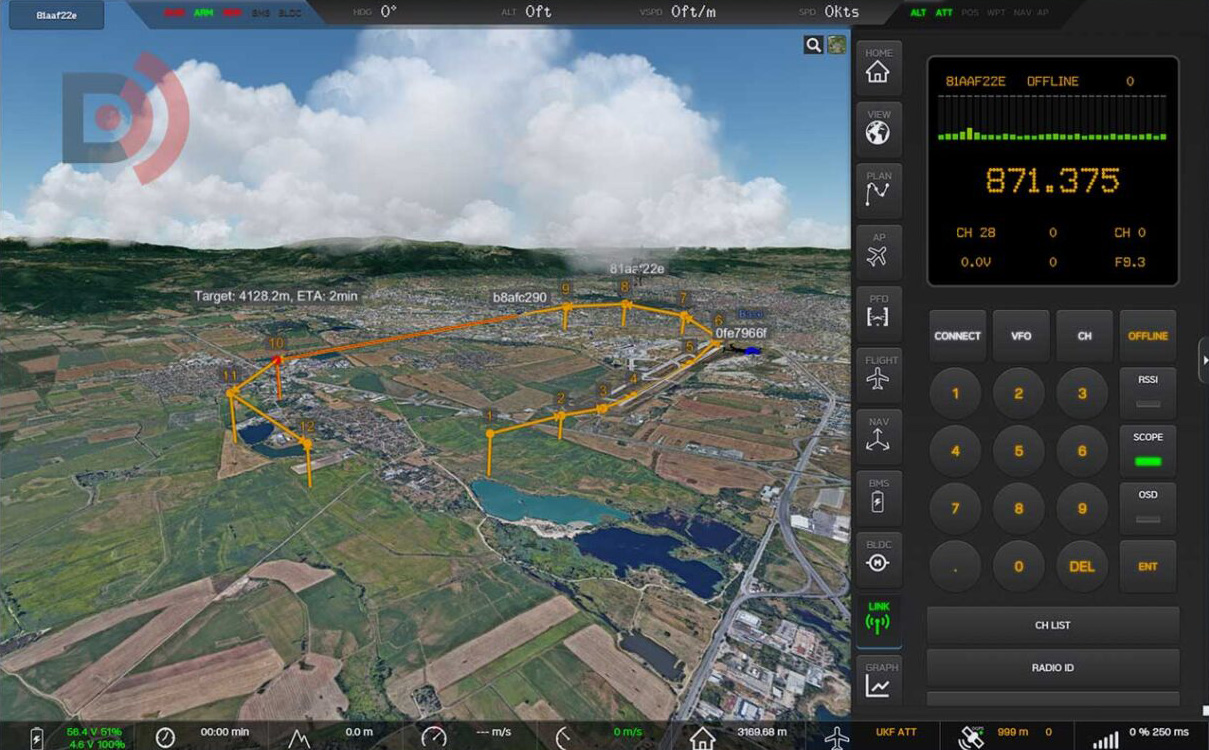
The HDS Autopilot supports autonomous flight operations, waypoint navigation, adaptive flight path control, formation flying and multi-UAV coordination. The system allows operators to simultaneously monitor and manage multiple active platforms, with real-time insight into aircraft status, mission progress, communication links and supporting operational resources.
Simulation & Training
The software suite includes a Hardware-in-the-Loop (HIL) simulation environment to support mission replay, operator training, flight validation, payload integration, and system testing. Mission-specific maps, operational overlays, and custom training environments can be configured to meet end-user requirements.
Operational architecture
The HDS Autopilot can function independently as an onboard mission management system or as an integrated aerial node within HDS FUSION. As part of the broader HADES ecosystem, the platform supports federated UAV operations, distributed situational awareness, aerial sensor integration, and coordinated multi-platform mission execution.
Integration & interfaces
Built using an open and modular architecture, the HDS Autopilot integrates with third-party mission systems, command environments, and operational networks. The software-defined architecture enables flexible deployment across military, security, and civil UAV applications.
Hardware Features
Software Features