
“Autonomous where necessary,
Federated where possible.”
HDS FUSION
THE SOVEREIGN OPERATIONAL CAPABILITY FOR MULTI-DOMAIN AWARENESS AND DEFENCE
HDS FUSION is the software-defined C4ISR platform that connects sensors, autonomous systems, command structures, and response capabilities within a single integrated operational environment.
By correlating and fusing data from radar, passive RF, EO/IR, autonomous and external operational systems, FUSION enables organisations to detect, classify, track and respond to threats more rapidly across air, land and maritime environments.
The platform can function as a fully independent command and control system or as an integration layer on top of existing national and NATO architectures. In both cases, organisations benefit from the same scalable, open, and sovereign software-defined foundation.
Sovereignty as a starting point
Sovereignty is not an option in HDS FUSION, but a fundamental architectural principle.
The end-user retains full control over sensor data, operational processes, intelligence products, and command authority. All processing, correlation, data fusion, and orchestration can be performed locally without reliance on external cloud infrastructure.
This allows FUSION to be deployed within the most critical military, government, and infrastructure environments, while data ownership, operational control, and decision-making remain entirely with the user.
Standalone or integrated from design
All systems from HADES Defence Systems are designed to function both standalone and integrated.
Radarsystems, passive RF sensors, EO/IR systems, autonomous platforms and response capabilities can be deployed independently while simultaneously being fully integrated within a broader HDS FUSION architecture when operational needs demand.
This approach prevents vendor lock-in, protects existing investments, and allows organisations to introduce new capabilities at their own pace.
CONNECT THE FOUR CORE SYSTEMS
HDS FUSION connects the four core systems of HADES Defense Systems within one integrated operational architecture.
UAS The UAS capability encompasses UAVs, cargo drones, strike platforms, autonomous mission systems, payload technologies, data links, and the proprietary HDS Autopilot architecture.
Radar and Sensing include radar, passive RF detection, EO/IR systems and distributed sensor technologies for early warning, tracking and continuous situational awareness.
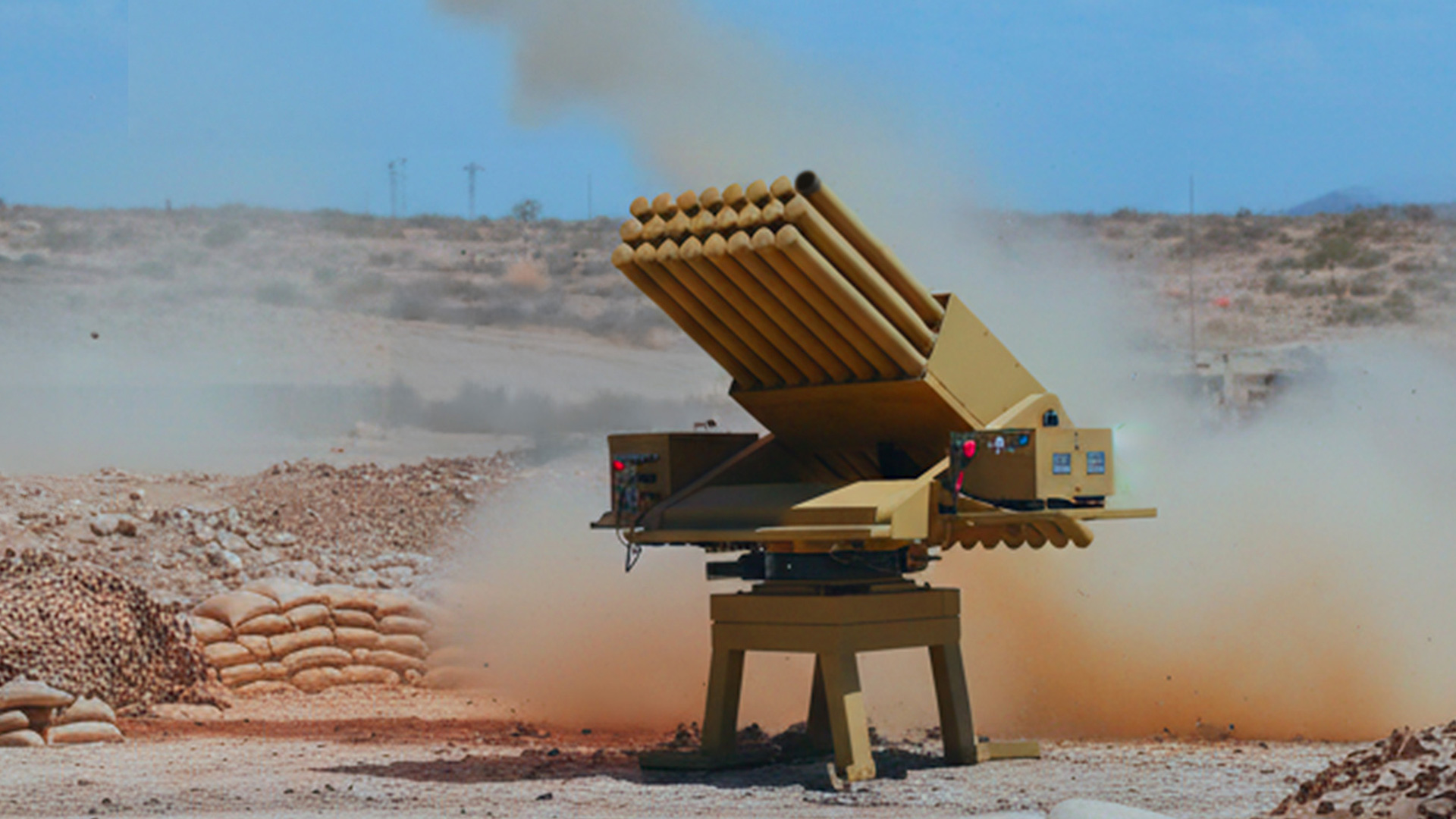
Effectors and Launcher Systems encompassing launch systems, munitions, effectors, and response capabilities that support sensor-to-effector workflows and coordinated threat response.
Counter-UAS Counter-UAS capabilities combine detection, tracking, classification, command & control, and layered response operations within a single integrated operational environment.
Autonomous Systems
Integration of UAVs, cargo drones, strike platforms, autonomous mission systems and advanced autopilot technology.
Sensing & Surveillance Systems
Integration of radar, passive RF detection, EO/IR systems, and distributed sensing architectures for continuous situational awareness.
Effectors & Launcher Systems
Integration of launcher systems, munitions, effectors, and future mission-specific response capabilities.
Counter-UAS
Integration of detection, tracking, classification and multi-layer soft-kill and hard-kill Counter-UAS operations.
Multi-Sensor Fusion for the Environment
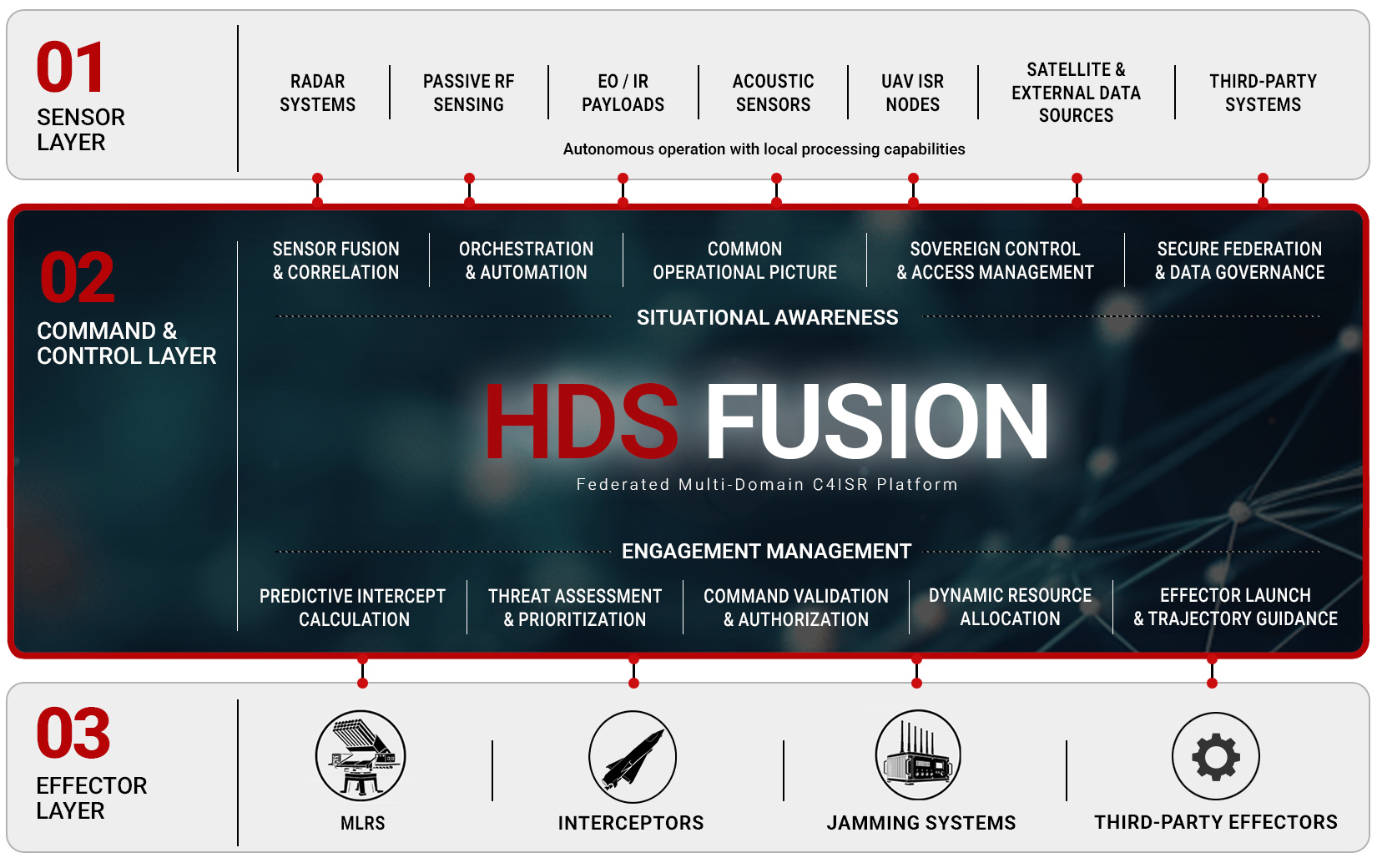
FUSION integrates multiple sensor and operational layers within a single, consistent operational picture.
The architecture supports radar, passive RF sensing, EO/IR systems, and third-party systems via open and modular interfaces. Each sensor node can function completely autonomously, while FUSION ensures correlation, data fusion, and an integrated Common Operational Picture.
Cross-layer fusion combines radar, RF, EO/IR, and external data sources into a single, persistent operational picture. This enhances detection reliability, improves track continuity, and reduces false alarms.
OPEN ARCHITECTURE & C4ISR INTEGRATION
FUSION has been developed with an open architecture philosophy, enabling the integration of both HADES and third-party systems without vendor lock-in.
Supported standards include ASTERIX, SAPIENT and Link 16 for defence and NATO environments, supplemented by ONVIF, MQTT and REST APIs for civil, security and infrastructure applications.
Existing national and NATO command structures can be integrated without replacing existing systems, sensors or operational investments.
SCALABLE DEPLOYMENT ARCHITECTURE
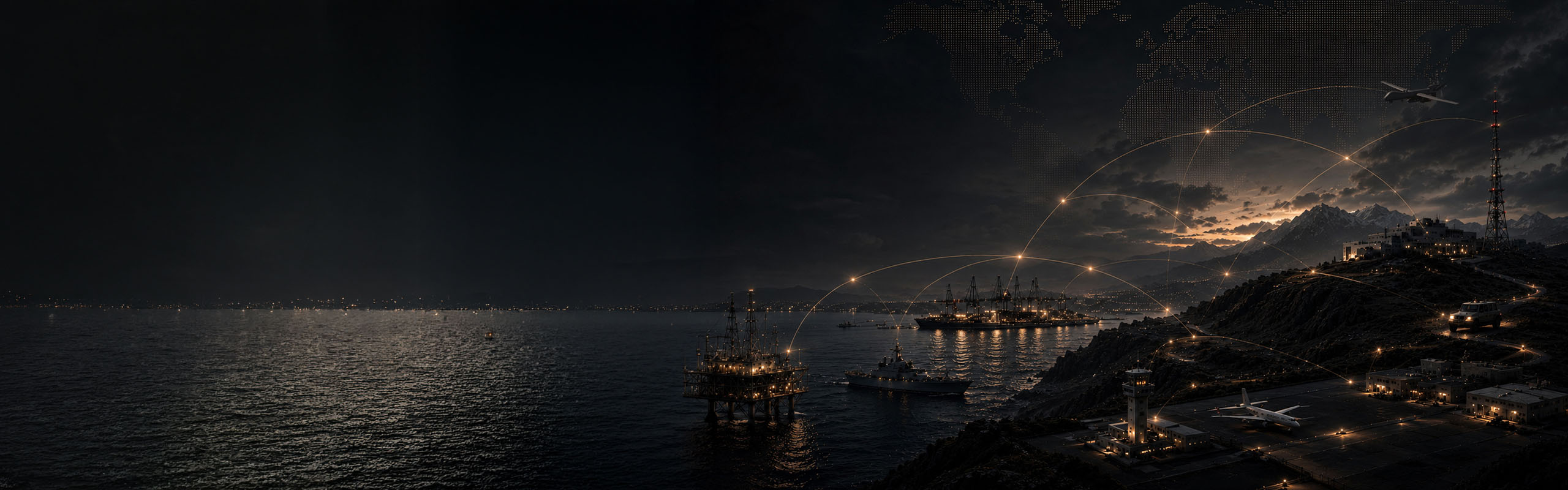
FUSION supports deployment on telecommunications infrastructure, dedicated surveillance masts, airports, ports, offshore installations, fixed locations, mobile tactical platforms, and critical infrastructure environments.
The same architecture supports applications such as border surveillance, coastal surveillance, airspace surveillance, infrastructure protection, Counter-UAS operations and national awareness networks.
From local object protection to regional and national surveillance architectures, FUSION scales with the end-user's operational needs, while maintaining a single consistent operational environment.
DRIVEN BY NATURE
No two operational environments are identical.
Each FUSION implementation is tailored to the end-user's operational requirements, deployment environment, threat context, and security classification.
The configurations shown on this website are reference architectures. The final system configuration, deployment topology, integrations, and operational workflows will always remain mission-specific and tailored to the unique needs of each organisation.
SENSE. FUSE. DEFEND.
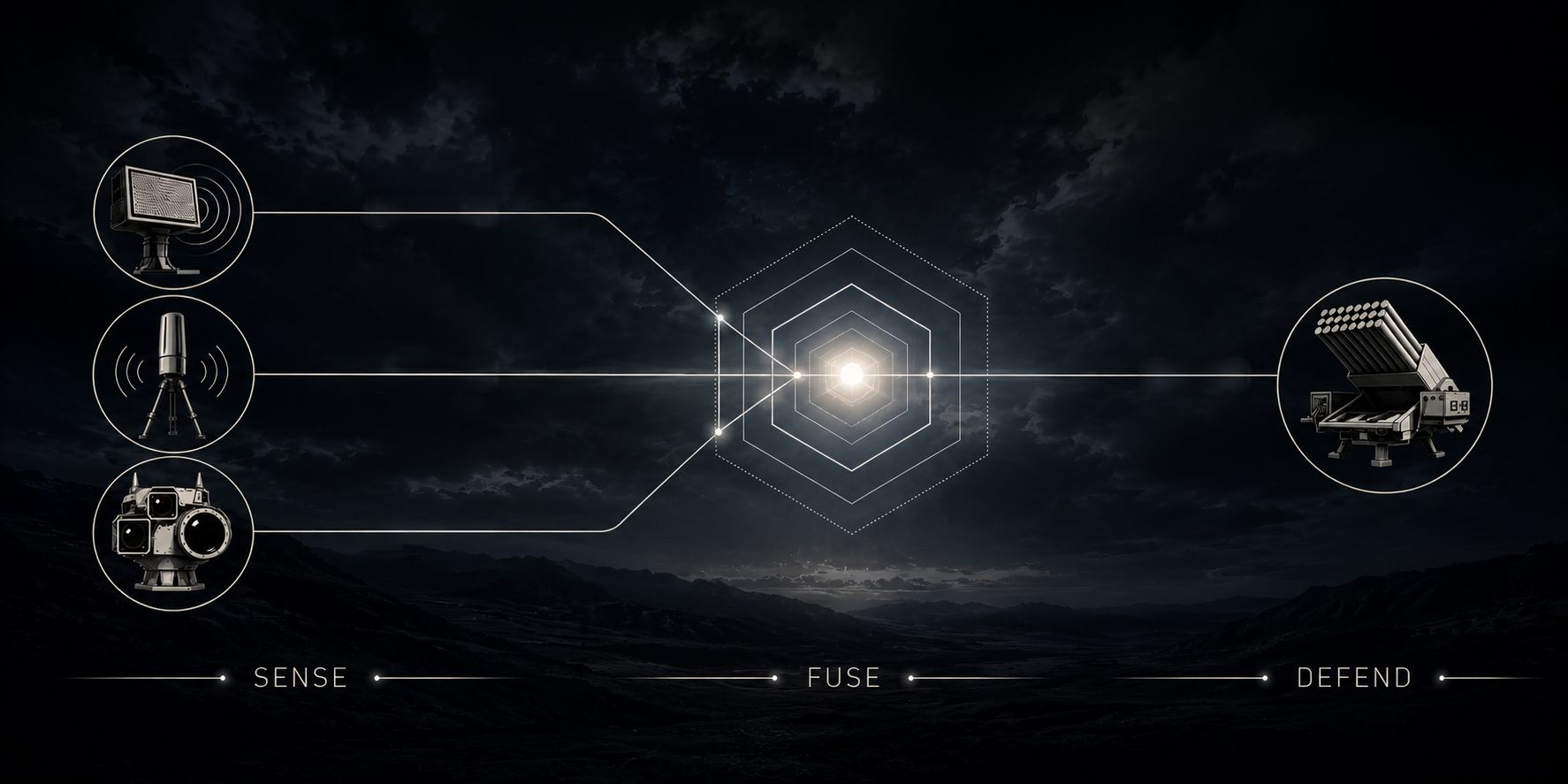
HDS FUSION forms the operational foundation that brings together individual sensors, autonomous systems, and response capabilities within a single integrated operational ecosystem.
Whether deployed as a standalone command and control system or as a sovereign integration layer on top of existing infrastructures, FUSION empowers organisations to achieve a higher level of situational awareness, faster decision-making, and more effective operational outcomes within any operational domain.
The ML-HADS shown serves as a sample configuration within our C-UAS solutions. Each implementation is fully mission-specific put together by HADES based on the operational requirements and security level of the deployment location.